



High Precision Benchtop SMU
S2028H
Dual-channel High-precision SMU
The S2028H is a high-precision, compact, cost-effective, dual-channel benchtop Source/Measure Unit (SMU) with a wide range of voltage source (± 60V) and current source (± 3A DC and ± 10A pulse) capabilities. It provides the excellent accuracy with 6 ½ digits display resolution (minimum 100fA/100nV) and nice graphical user interface (GUI) on superior color LCD.
Features

High Range
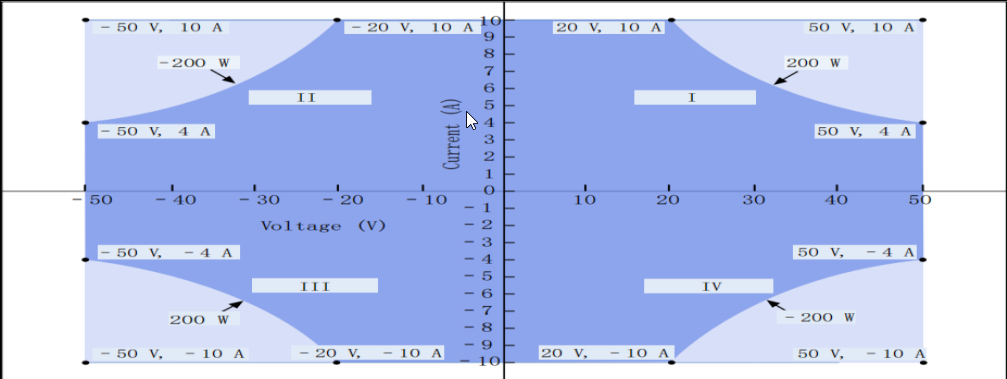
Range: ±60 V, ±3 A (DC), ±10A (pulse)
High Resolution
The minimum measurement resolution can reach 100 fA/100 nV
High Sampling Rate
Supports up to 1M ADC sampling rate
Threshold Trigger
Hardware high-speed IO, capable of threshold triggering, enabling efficient interaction between output measurement values and user systemsFunctions and Advantages
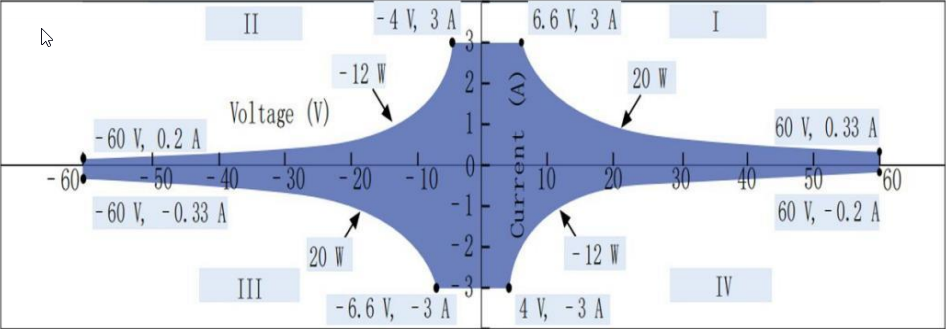
DC I-V Out Capability
|
Voltage Accuracy |
Range |
Programming Resolution |
Accuracy (1 Year) ± (% reading+ offset)[1] |
Typical Noise (RMS) 0.1 Hz-10Hz |
|
±60 V[2] |
10 μV |
0.02%+3 mV |
200 μV |
|
|
±6 V |
1 μV |
0.02%+0.3 mV |
60 μV |
|
|
±0.6 V |
100 nV |
0.02%+50 μV |
20 μV |
|
|
Temperature Coefficient |
±(0.15 × accuracy)/℃ (0℃-18℃,28℃-50℃) |
|||
|
Overshoot |
<±0.1% (typical. normal mode. step is 10% to 90% range, full range, resistive load) |
|||
|
Noise 10 Hz-20 MHz |
<5 mVrms (6V voltage source, 3A resistive load) |
|||
[1]
[2]
|
Current Accuracy |
Range |
Programming Resolution |
Accuracy (1 Year) ± (% reading+ offset) |
Typical Noise (RMS) 0.1 Hz-10 Hz |
|
±10 A[3] |
1 μA |
0.03% + 2mA |
20 μA |
|
|
±3 A |
||||
|
±1 A |
100 nA |
0.03% + 90 μA |
3 μA |
|
|
±100 mA |
10 nA |
0.03% + 9 μA |
200 nA |
|
|
±10 mA |
1 nA |
0.03% + 900 nA |
20 nA |
|
|
±1 mA |
100 pA |
0.03% + 90 nA |
2 nA |
|
|
±100 μA |
10 pA |
0.03% + 9 nA |
200 pA |
|
|
±10 μA |
1 pA |
0.03% +1 nA |
30 pA |
|
|
±1 μA[4] |
100 fA |
0.03% + 200 pA |
5 pA |
|
|
Temperature Coefficient |
±(0.15 × accuracy)/℃ (0℃-18℃,28℃-50℃) |
|||
|
Overshoot |
<±0.1% (typical. normal mode. step is 10% to 90% range, full range, resistive load) |
|||
[3] 10A range is available only for pulse mode, accuracy specifications for 10A range are typical
[4] Low Current Measurements, Triaxial Cable is recommended to connect: HI connect to core cable, guard connects to inner shield, outer shield connects to protective ground, LO connect to core cable, inner shield not connect, and outer shield connect to protective ground. Triaxial Cable rated insulation voltage is not less than 250V
|
Minimum Programmable Pulse Width |
100 μs |
|
Pulse Width Programming Resolution |
1 μs |
|
Pulse Width Programming Accuracy |
±10 μs |
|
Pulse Width Jitter |
2 μs |
|
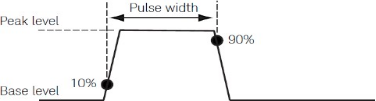
Pulse Width Definition |
The time from 10% leading to 90% trailing edge as follows |
|
Item |
Maximums |
Maximum Pulse Width |
Maximum Duty Cycle |
|
1 |
0.4 A/50 V |
DC, no limit |
100% |
|
2 |
1 A/20 V |
DC, no limit |
100% |
|
3 |
3 A/6.6 V |
DC, no limit |
100% |
|
4 |
10 A/20 V |
1 ms |
5% |
|
5 |
10 A/50 V |
400 μs |
2% |
|
Source |
Maximum Output |
Typical Rise Time [5] |
Typical Settling Time[6] |
Test Load |
|
Voltage |
50 V |
250 μs |
400 μs |
NO load |
|
5 V |
40 μs |
100 μs |
NO load |
|
|
Current |
10 A~100 μA |
90 μs |
250 μs |
Full load[7] |
|
10 μA |
120 μs |
300 μs |
Full load[7] |
|
|
1 μA |
300 μs |
600 μs |
Full load[7] |
[5] Leading edge, the time from 10% leading to 90% leading
[6] The time required from Pulse out 0 to reach within 1% of final value
[7] Test condition: Normal, resistive load 6V maximum output
|
Source |
Range |
Output Settling Time[8] |
Condition |
||
|
Fast[9] |
Normal |
Slow |
|||
|
Voltage |
60 V |
<120 μs |
<300 μs |
<1 ms |
Time required to reach within 0.1 % of final value at open load condition. |
|
6 V |
<30 μs |
<50 μs |
<300 μs |
||
|
0.6 V |
<30 μs |
<50 μs |
<300 μs |
||
|
Current |
3 A~100 μA |
<50 μs |
<100 μs |
<0.8 ms |
Time required to reach within 0.1% (0.3% for 3 A range) of final value at short condition. |
|
10 μA |
<100 μs |
<150 μs |
<0.8 ms |
||
|
1 μA |
<300 μs |
<400 μs |
<1 ms |
||
[8] Output transition speed: Fast, Normal, Slow. Users can adjust the APFC parameters based on the load characteristics to obtain precision, and fast output characteristics
[9] Slow mode is recommended for overshoot sensitive equipment. Fast mode may have overshoot on output in some condition
Similar recommendation

High speed communication test plays an important role in the rapid development of big data, cloud computing, 5G communication and other markets.
Semight offers various of instruments for optical Transceiver/Component testing, including wide bandwidth sampling oscilloscope, NRZ/PAM4 bit error ratio tester , burst error ratio tester, fast wavelength meter, high precise source measure unit, 400G network analyzer ,optical power meter, optical attenuator, optical switch etc. We provide cost-effective, complete solutions for optical testing.

The high-precision source measure units integrates the functions of voltage source, current source, voltmeter, ampere meter, and electronic load in one, which is widely used in high-precision IV test and measurement for various discrete components, photovoltaic, green energy, battery and other industries. Semight provides high-precision benchtop SMU and plug-in PXIe SMU of standard PXIe chassis, fully meeting the application of various test scenarios.
Details
Burn-in testing of laser is an important method to ensure the reliability of laser. Through the test of CoC or bare die, the early failure of laser caused by the defects in the process of laser production can be screened out in advance. Semight provides a complete solution from bare die to CoC, from high temperature(150℃ or higher) to low temperature (-40℃), with CoC automatic loading and unloading system, forming a complete test solution, Semight's laser chip burn-in/load/unload test system has been widely recognized by the market.
Details
The semiconductor front-end test is mainly used in the wafer processing to check whether the processing parameters of the wafer products meet the design requirements or there are defects affecting the yield after each step of the manufacturing process. The semiconductor back-end test equipment is mainly used after wafer processing to check whether the performance of the chip meets the requirements, which belongs to the electrical performance test. Semight provides solutions such as Wafer Level Burn In system and Known Good Die handler for SiC testing, offering the value to customer in test efficiency improvement and test cost reduction.
DetailsFollow
Name
E-mail verfication code
Phone
Password
Confirm Password
E-mail address
E-mail verification code
New Password
Confirm Password

 Ask for demo